Thursday, December 5, 2013

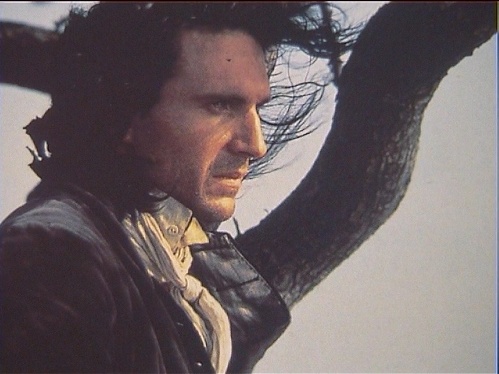
Kobe Bryant Or the Modern Prometheus

Kobe Bryant Or the Modern Prometheus

By: Vincent Cao

Throughout his coveted career, Kobe Bryant has stood out in a variety of ways. He shoots. He wins. He garnishes respect. Yet, at the same, time, many of his audience members are not satisfied; in one-way or another, many of us criticize him.

The NBA has crafted Kobe Bryant; the organization has given him life. Drafted right after high school, the NBA provided no special mentorship or privileges. Instead, the league gave Kobe a ball, a court, and a team. Nothing more. Within a league of more than 400 players, Kobe stands out. Some may even say, “He’s a monster!” Dubbed as the “Black Mamba,” Kobe’s physique, talents, and precocious career parallel something supernatural – something not human.

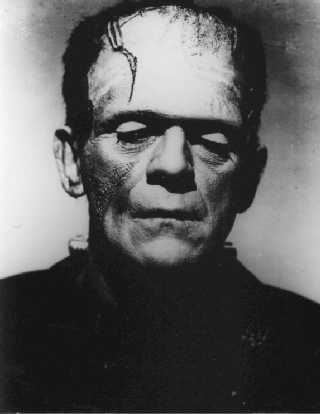
Is there someway in which Kobe can be compared to Frankenstein’s infamous daemon?

Frankenstein gave his creature an abnormal life. He crafted the daemon from the deceased, just as Kobe crafted his skills based on retired players such as Michael Jordan. Frankenstein’s daemon stood out in the world; his enormous strength, physique, and acuteness have made him distinct.

In recent lighting, Kobe Bryant has been criticized for his hefty $48.5 million contract extension. They say he is “Selfish.” Defending himself, Kobe takes the issue up with the league –- the league that gave him “life” – in a direct manner. He describes the hardships on the salary caps that the NBA issues – salary caps that “ensure that players like him are always underpaid.”

In my opinion, we can draw parallels from Kobe’s situation to that of the daemon. The daemon too feels suppressed. Even if he doesn’t have to deal with the issues on salaries, he believes that there are inherent limits that restrict his happiness and freedom – restrictions that his creator (the league) has established. Shelley allows the readers to determine whether the daemon was truly selfish or not. As readers, some of us believe that his ruthless murders cannot be forgiven. The daemon defends him by saying that he was forced into this path of cruelty, which is similar to how Kobe defends himself. In the end, we hear both sides of the arguments.

In the article, Kobe says, “he understands that it’s stupid to gripe about what he’s “worth” when the system that’s setting his value is rigged in the first place.”

As readers, we must wonder whether the daemon’s “value [was] rigged in the first place,” and whether Kobe and the daemon were both truly “selfish.”

Nonetheless, both the NBA and Frankenstein have created a monster. For better, or for worse…


         versus

Friday, November 22, 2013

Is Parental Guidance Akin to Coaching?

Is Parental Guidance Akin to Coaching?
            As we are reading Frankenstein by Mary Shelley in our English class, I have noticed many possible themes the author is trying to convey to her reader. One major idea I believe Shelley was trying to demonstrate is related to parental care and responsibility. She was trying to share that most children’s personality is directly influenced by their parents’ behavior and personality. When parents fulfill their responsibilities and show affection toward their children, the children tend to mirror these characteristics into themselves. This is shown with, both, Elizabeth’s and Victor Frankenstein’s character. They were both deeply loved and extremely cared for throughout their childhood, which resulted in the development of their very well-mannered, keen and loving personality. On the other hand, the creature, who was abandoned and neglected by his creator and most of society, developed a bitter and vengeful personality.

            Could this theme apply to a coach and his/her athlete? Does an athlete’s efficacy depend on his/her coach?

            I believe that an athlete’s performance is directly motivated by the coach. Countless athletes have the talent, but not all of them go pro because most athletes can’t distinguish these talents without assistance. This assistance is provided by a good coach who is devoted into executing his/her responsibility. Like parents, a coach tends to develop a respectful and beneficial relationship with an athlete. Like parents, good coaches also comfort, care and support an athlete when needed. Like children, athletes respond to the coach’s behavior with respect, care, and personal growth.

            A paradigm for this is John Calipari, who is the best college basketball coach alive (may be biased as a UK fan). He produced about seventeen draft picks in the four years he has coached Kentucky, thirteen of those picks were in the first round. He has also coached three number 1 overall picks which included Derrick Rose, John Wall and Anthony Davis. Derrick Rose is now an all-star and Anthony Davis was part of Team USA in the 2012 Olympics. Akin to parents, John Calipari and many other coaches nurture their athletes, developing them into talented professional competitors.


By: Viresh


Thursday, November 14, 2013

Jeremy Lin and my Unadulterated Adventure With Faith

Jeremy Lin and My Unadulterated Adventure With Faith

By: Vincent Cao

I’ve been reading about a lot of faith. But not like faith as in the Bible… Ironically, I have found this faith in Kurt Vonnegut’s Cat’s Cradle and in John Irving’s A Prayer for Owen Meany. This dichotomy of literature, one being a more satirical piece while the other a more serious, analytical one, presents faith and religion in two different lightings.

Cat’s Cradle, a satirical piece, uses a cacophony of random characters, symbols, and topics: religion, science, love, and death. The book demonstrates a dynamic evolution in the narrator’s religious views. At one point, the book even suggests that religion may sometimes be a futile effort: “She was a fool, and so am I, and so is anyone who thinks he sees what God is Doing, [writes Bokonon].” Although the book concentrates on the arms race, and the debilitating effects that the fictional Dr. Felix Hoenikker has on society with his invention of the atomic bomb, we as readers can see the underlying religion tones throughout the novel. Bokononism, a fictional religion in the book, focuses on some peculiar and idiosyncratic beliefs and inspires many characters in the book to do unimaginable things. But nonetheless, I noticed that religion could sometimes drive men (or women...) mad. Don’t worry. I’m not sexist. I promise.


On a more serious note, I found A Prayer for Owen Meany extremely uplifting. The ending? Just wow. Owen Meany’s Christ-like persona captured my fervent interests for finishing the book; as an instrument of God, he certainly filled that dull, uninspiring void that I expected from those kinds of books. His premonitions, savior-like mentality, and distinct faith resonated deeply with me. Through Owen Meany, I found that faith becomes deeply rooted and pervasive within non-believers through the actions of others.


And what about faith in Wuthering Heights? Sure the characters discuss faith and religion, but I feel as if Joseph is the only one who zealously believes. Is that why each of the Earnshaws and Lintons are destroyed one by one? Because they don’t have faith? I also noticed how Joseph is left as the only character that remains unchanged throughout the entire novel. Do we credit this static characteristic to his zealous faith?


Jeremy Lin, Linsanity, The Chosen One, MVP, and Harvard Basketball were all synonymous at one point. Jeremy Lin, a current Houston Rockets NBA player, has inspired those on and off the court through his quick crossovers, determination, and perhaps most importantly, his faith. One journalist uniquely writes about Jeremy Lin and his faith:  “And, yes, he is a Christian, too, but with a brand of faith, shaped by his background, that I can relate to much better than many I have seen in the public arena.” Jeremy Lin has been seen praying on and off the court; he has been heard gratefully dedicating his accomplishments to God and his faith. And through these actions, we often wonder whether this faith has made him the dynamic and cultural figure he is today. “ ‘I do believe God has the perfect plan,’” says Lin. Recently, Jeremy Lin scored 31 points in one game and racked up 34 points and 12 assists in another. With all of these accomplishments, we, or at least I, often wonder how much of an influence his faith has had.

Thus concludes my unadulterated experience with faith through literature, whatever Wuthering Heights is (just kidding), and sports.


Friday, November 1, 2013

Does Plight Favor Destruction or Perfection?


Does Plight Favor Destruction or Perfection? 

I am sure most people have heard the cliché, “No Pain. No Gain.” The belief that people will prosper overall after faced with difficult situations was, and still is, widely accepted by society. But this statement doesn't apply to Wuthering Heights. In fact, Emily Bronte is somewhat conflicting this belief in Wuthering Heights.

Up until the very end of the book, various characters of Wuthering Heights, by Emily Bronte, have regularly exhibited abuse and great suffering. From Heathcliff’s arrival into Wuthering Heights up to his departure halfway through the book, Heathcliff has dealt with considerable mistreatment. Once he returns, he inflicts abuse onto the characters around him. This grief and mishandling plays a major role in the book as it develops or shapes the characters. Why do you think this nature of behavior is lavished in the novel? Was this a possible meaning Emily Bronte was trying to convey to her readers? Does pain just create greater pain and generate vengeance or distress?

Personally, I believe that challenging situations instigate a person’s growth. A great example of this is when NFL player, Adrian Peterson, had a breakout season after suffering a critical ACL tear two years ago. He was named MVP of the 2012 season - the same year of his return - and nearly broke the total rush yards in a single season record.


But, I may be biased toward this belief as it is “the danger of a single story.” This may be Bronte’s purpose; to force the readers into viewing her view of the world. Bronte is giving the other side of the story, the story in which athletes don’t recover from injuries or plight. This was evident last year during the Manti Te’o girlfriend hoax. After discovering that his girlfriend’s apparent existence and death was completely imaginary, Manti Te’o’s football performance disintegrated. The very infamous BCS championship against Alabama highlighted this break down as he was “not his normally productive self” during Alabama’s sweeping win. His draft pick also suffered enormously as he dropped into the second round. Although it may be too early, he has not made a significant difference to the San Diego Chargers, either. Will Te’o bounce back to become the superior athlete he once was in College or will he continue to break down just as the characters in Wuthering Heights have?

By: Viresh


Friday, October 25, 2013

Fire Schiano. Fire Heathcliff.

Wuthering Heights is an epitome of classical ideals and antiheros. With Heathcliff at the forefront of the story, we, as readers, can’t help but natural sympathize with Heathcliff, yet we concurrently condemn him. Why is this? Let us review. Heathcliff has vowed for revenge against Edgar Linton and Hindley. After eloping with Isabella, Heathcliff returns a broken, cruel man: constantly abusing his son Linton, purposefully denying Hareton of a life of privilege and education, and oppressing both Ms. Dean and Catherine. Although we sympathize with Heathcliff’s behavior driven by love and loss, we cannot overlook his staunch revenge: “I’m trying to settle how I shall pay Hindley back. I don’t care how long I wait, if I can only do it at last. I hope he will not die before I do!” (pp. 48).


Coincidentally enough, a feature has appeared in the world of sports that parallels the readers’ attitudes towards Heathcliff at this point in the story.

“Fire Schiano” has become a popular phrase around the Florida region, referring to Tampa Buccaneers coach Greg Schiano. Recently, a local radio station in Tampa even bought a billboard “calling for the coach’s ouster.” In order to connect Schiano with Heathcliff, we must first analyze the origins of this venom towards Coach Schiano. First off, the Bucs are winless in their first six games and have lost almost all of their past 12 games. Like the Heathcliff’s situation in Wuthering Heights, Schiano had gone through a “messy breakup” with the head of the team (or household), quarterback Josh Freeman. An unreasonable coach, Schiano benched this significant figure on the team for three games. Although he later released Freeman, many question Schiano’s decision-making process regarding this matter.

As mentioned before, Schiano benched the head of the team. Likewise, can we not say that Heathcliff essentially “benched” the head of the household? In chapters 27 and 28, we are exposed to the devastation inflictions that Heathcliff imposes on Nelly Dean, the head of the Linton household – even locking (benching) her in a room at Wuthering Heights. These travesties certainly parallel each other, specifically in terms of audience response. After uncovering these events in the story, I felt strong disdain towards Heathcliff. Although before I had condoned his flaws due to his tragedies with Catherine, I simply now cannot stand him. BOOOOOOOOOOO Heathcliff. Recently, Schiano was also booed after leaving the field with a 31-20 loss to the Philadelphia Eagles.


I do know one thing’s for sure. I would not want either Heathcliff or Schiano on my team.


Friday, October 18, 2013

Does Benefit Justify Treachery?

Does Benefit Justify Treachery?

So far in Wuthering Heights by Emily Bronte, I have noticed two separate and very distinct plots that are structuring this novel. It begins in the present with Lockwood as the narrator who is visiting Wuthering Heights and its people for the first time. Then, Nelly Dean takes over the narration and the novel shifts into a flashback which creates a plot within the already existing plot.

I want to focus on the climax of this second plot. The scene with the most tension was when Catherine declares she is going to marry Edgar Linton, instead of Heathcliff who Catherine actually loves. This was a turning point or a critical moment because it drives Heathcliff away and induces vengeful emotions. This scene reminds me of the moment when LeBron James abandoned the Cleveland Cavaliers to go play for the Miami Heat in 2010. “Abandoned” might be harsh to some, but, as a Cavaliers fan, I believe it is the perfect word choice.

His unabridged career existed in Ohio. He was born and raised in Ohio. Then, straight from High School, he was drafted to the Cleveland Cavaliers. So then, why did he sign with the Miami Heat? What did the Heat offer that the Cavaliers didn’t’? Just as Catherine didn’t marry Edgar because she loved him, but because I believe she saw personal advantage and social ambition; I believe LeBron James didn’t move to Miami for its warm climate and beautiful city, but for personal gain and desire. He wanted a ring. Can betrayal be justified by personal gain and ambition? Similar to the hatred Heathcliff felt towards the Lintons after Catherine left; many Cavalier fans exhibited a hatred for LeBron and the Miami Heat. It is normal to express hatred after being betrayed. Right?

After marrying Edgar and achieving money and greater social status, Catherine falls into deep misery and desires to return to Wuthering Heights. Is she beginning to regret leaving Heathcliff and her old manor, Wuthering Heights? Do you think LeBron James will return to his former team after achieving two national championship rings? Interestingly enough, there have been talks and rumors that LeBron James is considering to return to Cleveland after his contract with the Miami Heat is over. Like Catherine, is it possible that LeBron James regrets leaving his home?

By: Viresh 

Friday, October 4, 2013

The Holden Caulfield in Jason Kid?

The Holden Caulfield in Jason Kidd?


Recently, the National Basketball Association has given a two-game suspension to the Nets Coach Jason Kidd due to a drunken-driving charge. In addition to the immediate consequences this reckless behavior has resulted in, there may be further ominous long-term effects.

After reading J.D. Salinger’s The Catcher in the Rye, I was captured by the allusions to teenage desolation, isolation, individuality, and arrogance that the novel exhibits through the protagonist, Holden Caulfield. Throughout the entire novel, Holden experiences a turbulent and depressing path in New York City. And in the end, Holden ends up in a psychiatric ward.

The interesting similarities between Holden Caulfield and Jason Kidd, however, are evident in both of their behaviors. Like Jason Kidd, who was punished for driving under the influence, Holden was expelled from his school due to his lack of academic drive and his failing status. Although the events of Jason Kidd’s suspension have not played out yet and will most likely not be as drastic in terms of psychological outlook as Holden’s punishment, we can speculate similar events to occur to Jason Kidd following this suspension. Will Kidd flee to other sanctuaries during this suspension? Like Holden, will he continue his intractable perspective on his faults? Like Holden, will Kidd seek the companionship of his past acquaintances?
And in terms of comparing the two figures, is it not reasonable for us to discern the same characteristics that both adolescent Holden and adult Kidd exhibit? Following the events in which Kidd rammed his SUV into a telephone pole while intoxicated, Kidd’s isolation from his peers and mentors alike must certainly parallel the situation that Holden experienced. Right?

Many readers and literary critics often find that The Catcher in the Rye most relates to readers during their teenage phase. I, however, believe otherwise. I think it would be beneficial for Jason Kidd to read this novel even as an adult. I am sure that he, too, will empathize with the isolation and cynical attitudes that Holden demonstrated after being expelled from school. This novel might even remind Kidd of his adolescence, prompting him to realize that his reckless behavior has not changed severely from his youthful days.

Overall, I believe we can often find ourselves within literature. We often find both negative and positive qualities about ourselves; nonetheless, I believe that we all are able to relate to certain aspects and figures in novels.


But please Jason: just don’t go around calling everyone “phonies.” Everyone makes mistakes. Just remember, “You’re aces, kid.”


Versus